
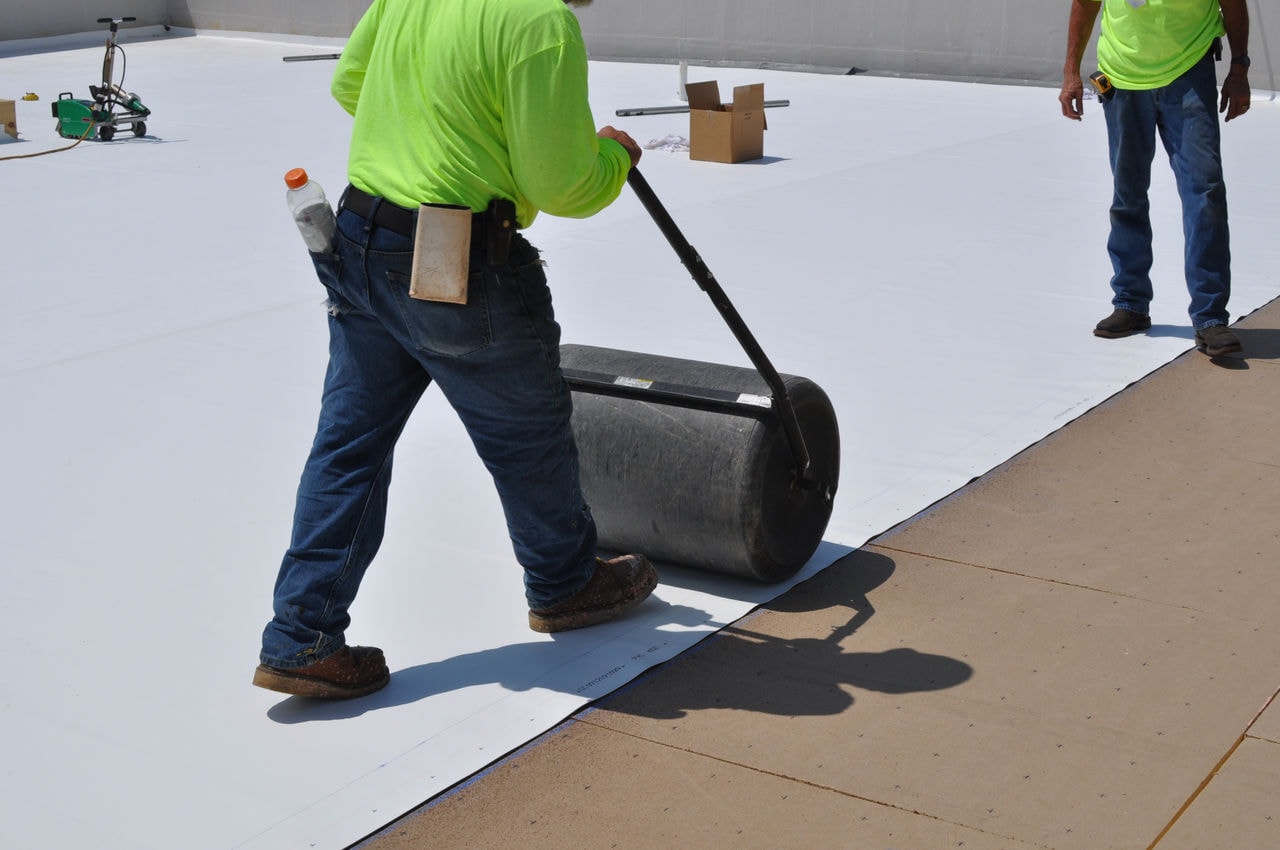
Low-slope roofing comprises the vast majority of today's commercial roofs. A low-slope roof is generally considered to be one with a slope (rise over run) of 3:12 or less, although some roofing professionals consider anywhere from 2:12 up to 4:12 to qualify as a low slope.
In designing a low-slope roof, the building type, climate, and code requirements are all important factors to consider.
Building Type
The interior use of the building can affect the amount of moisture and airflow that could potentially permeate the roofing assembly. For example, while an office building typically maintains consistent temperature and humidity throughout the building, a multifamily building will have fluctuations due to showers and kitchens, which introduce additional heat and moisture at various times throughout the day. More extreme examples include cold storage buildings, ice rinks, and data centers, which require consistently low temperatures.
Roof overburden elements, such as amenity decks, swimming pools, solar panels, or vegetative roofs, will also impact roof design.
Climate Zone
Whether the building is located in a warm, humid climate or is subjected to freezing weather, heavy rain, wind, or hail, the climate zone is an important consideration in low-slope roofing design. It determines, among other things, the minimum R-value for roof insulation, the amount of wind uplift, and whether the roof is subject to weather related impact damage.
Building Codes
The two main codes on which all state building codes are based are the International Building Code (IBC) and the International Energy Conservation Code (IECC). In addition to prescriptive requirements, the IBC includes reference standards, such as ASHRAE, ASTM, and ASCE, while the IECC includes performance modeling standards.
IBC Chapter 15, which focuses on roof assemblies and rooftop structures, contains important directives for weather protection, roof coverings, flashing and coping, wind resistance, and perimeter edge securement. Among the reference standards in Chapter 15 is ASCE 7, which addresses wind uplift for roofs. Project-specific information, like location, wind speed, and roof zone, is translated into uplift pressures that inform the design of the roof membrane and edge metal. Testing of perimeter edge metal is also covered by reference to ANSI/SPRI ES-1.
IBC Chapter 13, which focuses on energy efficiency, references that buildings must be designed in accordance with IECC 1301.1.1. Other requirements among these standards include the installation of a continuous air barrier and the minimum R-value for roof insulation based on climate zone, building occupancy, and type of insulation.
For existing buildings, the International Existing Building Code (IEBC) mandates compliance with IBC Chapter 15 for roof re-covering or replacement (with some exceptions noted in IEBC Section 705).
Low-Slope Roofing Components
The layers of a low-slope roof work together to protect the building and its occupants by controlling the flow of bulk water, mitigating air and vapor movement through the assembly, and improving thermal efficiency.
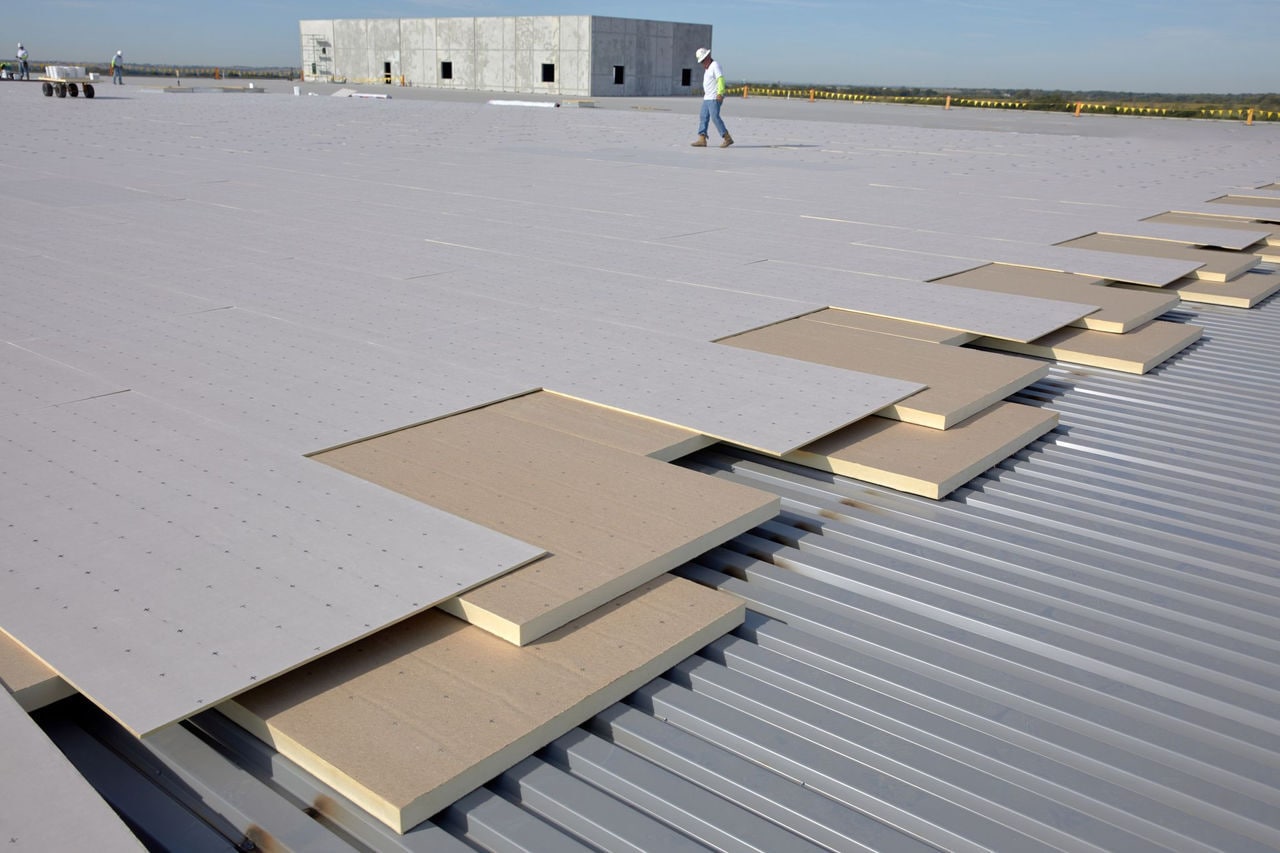
A typical low-slope roof assembly consists of the following components, in order from bottom to top:
Roof Deck
The roof deck spans the building's beams, joists, or trusses and provides the structural support for the other layers of the roof assembly. Steel decks comprise the majority of the market due to their economy, ease of installation, and wide array of configurations, thicknesses, and sizes. Wood, in the form of plywood, OSB, or planking, is mainly used in the residential market, as well as some commercially built structures, such as multifamily residences, while concrete decks are more common in large municipal or institutional projects.
Substrate Board
The substrate board, made of high-density polyisocyanurate (polyiso), gypsum, wood fiber, or glass mat, is an optional layer that's usually installed on metal roof decks to contribute to the fire rating of the assembly, or provide a continuous substrate for the vapor retarder.
Vapor Retarder and Air Barrier
A vapor retarder, if needed, is a self-adhered sheet which is installed on the roof deck or substrate board under the insulation. It minimizes water vapor diffusion, which can cause condensation damage to the roofing assembly and can be installed as an air barrier to control airflow between the exterior and interior, which can introduce more moisture into a building than vapor diffusion. Continuous air barriers have been required by the IECC since 2015. The National Roofing Contractors Association (NRCA) recommends the installation of a vapor retarder on all concrete decks, on any roof deck in a building with high interior humidity, and in cold climates. Vapor retarders can also act as air barriers.
Insulation
Insulation provides thermal resistance and, in some cases, fire resistance and compressive strength. The most popular insulation for low-slope roofs, comprising the majority of the market, is polyiso, which has an R-value per inch of 5.7 and compressive strength of 20–25 psi. Other insulation materials include extruded polystyrene (XPS), expanded polystyrene (EPS), mineral wool, and vacuum-insulated panels (VIP). Mineral wool is rarely used in low-slope roofing assemblies due to its low R-value and poor compressive strength, while VIP is quite expensive and remains a niche product.
Since 2018, the IECC has required two layers of insulation, staggered and offset, to minimize water or air infiltration.
Cover Board
The cover board is an optional layer that protects the insulation from impact damage, thus greatly increasing the overall resiliency of the roof. Cover boards are made of high-density polyiso, glass mat, cementitious material, or gypsum and are necessary in Severe or Very Severe hail zones and recommended on roofs with heavy foot traffic. Depending on the material, a cover board can also increase fire resistance or serve as an additional thermal barrier.
Roof Membrane
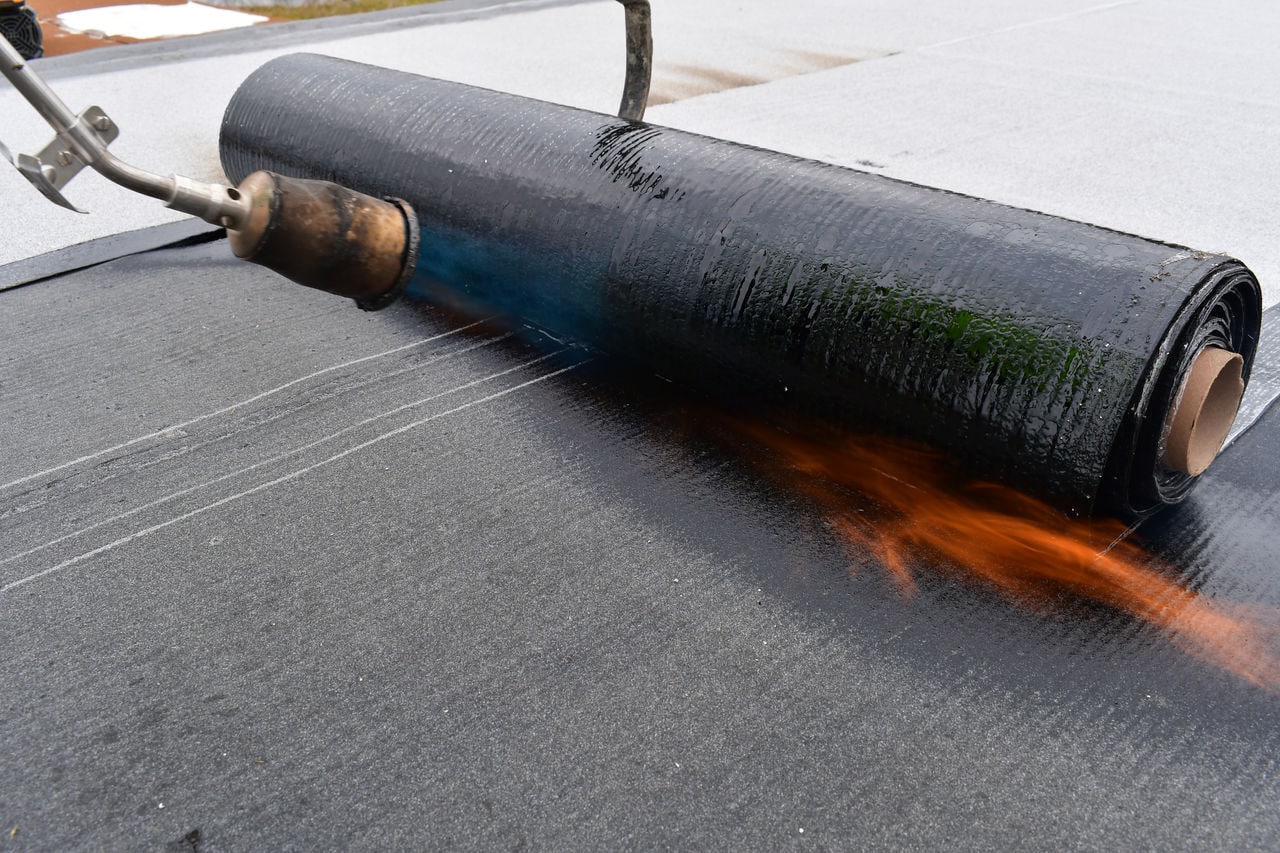
The original system for low-slope roofs was the asphaltic built-up roof (BUR), first composed of multiple layers of rags, paper, or asbestos hot mopped with asphalt. Over time, the plies evolved into modified bitumen membranes of asphalt-impregnated fiberglass felts, fabrics, or mats, with the addition of rubber or plastic modifiers. These Styrene Butadiene Styrene (SBS) or Atactic Polypropylene (APP) membranes can be hot mopped, torch applied, cold applied, or self-adhered.
Single-ply roof membranes comprise the majority of low-slope roof installations, having overtaken the use of asphaltic systems in the commercial roofing industry. Their advantages include ease of installation, economy, and durability to ponding water, often with sustainability benefits, as well. Single-ply membranes include thermosets, like Ethylene Propylene Diene Monomer (EPDM), and thermoplastics, like Thermoplastic Polyolefin (TPO), Polyvinyl Chloride (PVC), and PVC Ketone Ethylene Ester (KEE).
EPDM comes in large sheets that can be installed quickly, but the seams have to be taped or glued, and EPDM's dark color does not meet the demand for energy-efficient cool roofs.
In comparison, thermoplastic membranes are monolithic and durable due to their heat-welded seams, and their high Solar Reflective Index (SRI) makes them an excellent choice for cool roofs. PVC is very flexible, with good resistance to oil and grease. PVC KEE has best-in-class resistance to oil, grease, and jet fuels, and due to a solid plasticizer, it remains flexible and durable for its entire lifecycle. TPO has been the preferred choice among single-ply membranes for decades, capturing the majority of the commercial roofing market. Known for its low cost and fast installation, it is colorfast, inherently flexible without the use of plasticizers, and is not susceptible to algae or mildew growth in warm climates.
Liquid-applied membranes of reinforced silicone, acrylic, and urethane cure quickly, are great for challenging penetration details, and have good resistance to oil and grease. However, because they require highly specialized labor and can't be applied in cold weather, they comprise a minor percentage of the market.
Attachment Methods
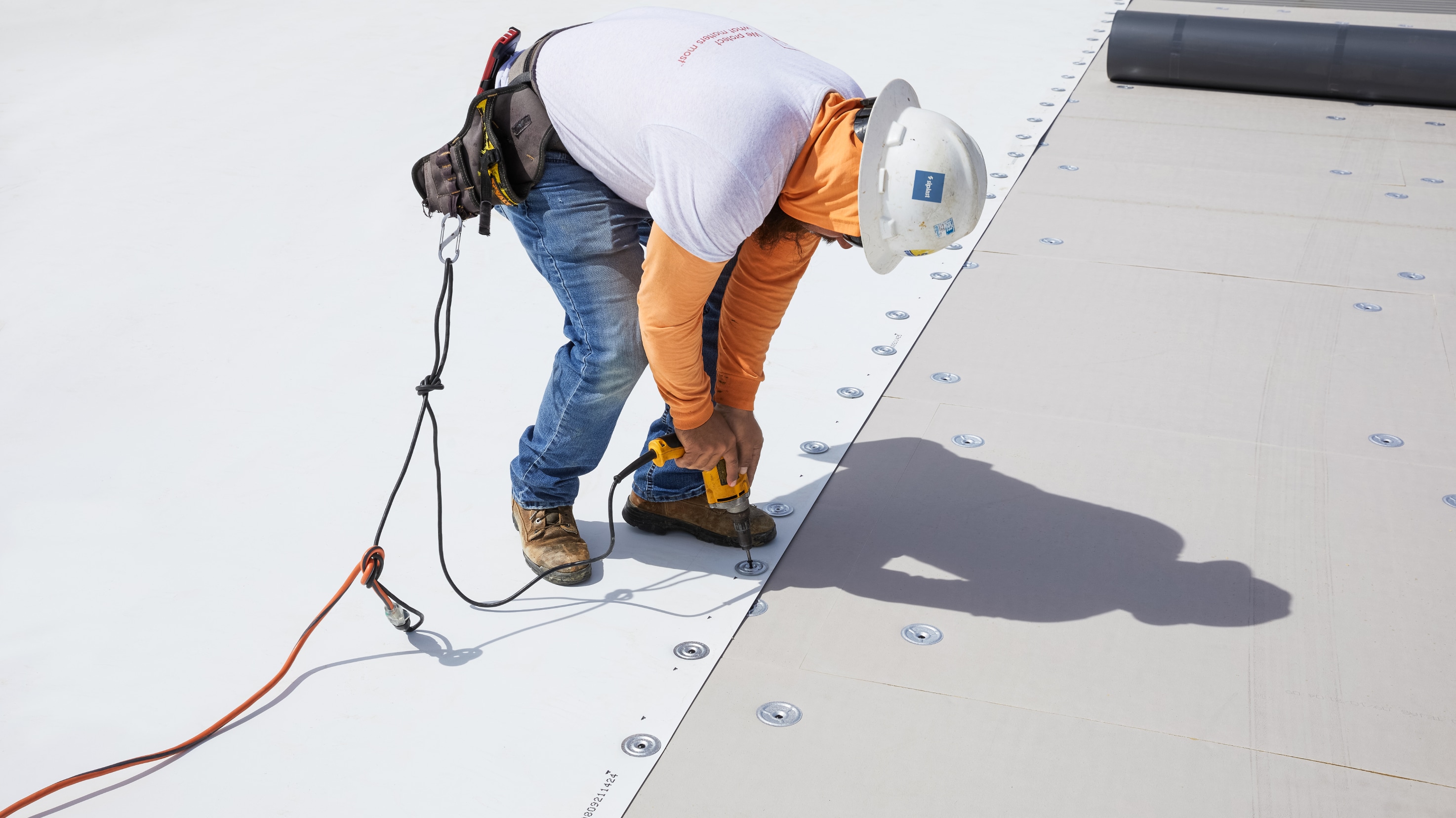
Single-ply roofing membranes can be adhered, ballasted, attached mechanically, or induction welded, which heat-welds mechanically attached plates to the underside of the membrane. Ballasted roofs use aggregate or pavers to keep membranes in place but are restricted by code in areas with high wind uplift.
On concrete decks, the first roof assembly layer is always adhered, whereas on steel and wood decks, the first layer is most commonly mechanically fastened. Subsequent layers can be either mechanically fastened or adhered, and many roof systems employ a hybrid method, where the first layer is attached mechanically, and subsequent layers are adhered. This avoids the thermal bridging caused by mechanical fastening, which can lower effective R-value.
A well-designed roof assembly takes into account the unique circumstances of each roof, along with careful consideration of all roof components. Visit Siplast for more information.
