

As changing climate conditions continue to influence commercial building design, the building envelope is more critical than ever. Among the myriad components of the building enclosure, roof insulation plays an important role.
Not only is roof insulation key to thermal efficiency, but it can contribute to meaningful reductions in a building's total carbon footprint and, thus, whole-building sustainability.
How to Calculate Total Carbon Footprint
The calculation of the total carbon footprint of a building involves analysis of the following:
Embodied Carbon
Building components carry carbon debt from all of the processes involved, from extracting raw materials to incorporating them into the completed building and beyond.
"Cradle-to-Gate" is a term that refers to the calculation of environmental impacts, one being carbon emissions, resulting from raw material extraction, the associated transportation, and manufacturing. "Cradle-to-Grave," a more comprehensive analysis, encompasses the entire life cycle of the material. This includes not only raw material extraction, supply, and manufacturing but also construction and installation, maintenance and repair, deconstruction and demolition, waste processing and disposal, and transportation from one stage to the next.
Operational Carbon
Operational carbon is the calculation of the amount of carbon generated / emitted due to energy used in operating the building after construction is completed. It involves analysis of heating, cooling, and lighting systems as well as equipment and appliances.
Currently, in the majority of buildings, operational carbon far exceeds embodied carbon as a contributor to a building's total carbon footprint. Some projections into the year 2050 anticipate that the embodied/operational carbon distribution will be nearly 50/50. However, this will depend on making substantial progress in improving the energy efficiency of building operations between now and then.
Carbon Dioxide Equivalent (CO2e)
In some cases, it is necessary to account for the global warming effects of pollutants other than CO2. The U.S. Environmental Protection Agency sanctions the use of the term "CO2e" to refer to "the combination of the pollutants that contribute to climate change, adjusted using their global warming potential."
In other words, the calculation of CO2e translates the effects of pollutants, like methane or nitrous oxide, on the atmosphere into an equivalent volume of CO2.
The Role of Roof Insulation
Insulation, in general, and continuous insulation used as part of low-slope roofs, in particular, are in a unique category as the only building materials that can directly reduce operational carbon emissions. Roof insulation can actually offset its entire embodied carbon debt through its most important characteristic: the reduction of a building's energy use.
The thermal resistance properties of roof insulation minimize heat gain or loss, thus reducing HVAC system loads and, in turn, lowering overall building energy consumption. As a building material with operational benefits, roof insulation is considered a positive "investment" in reducing a building's operational carbon footprint.
A study conducted by the Polyisocyanurate Insulation Manufacturers Association demonstrated that roof replacements with code-compliant levels of roof insulation can assist building owners in cost-effectively reaching energy reduction goals while cutting energy costs and carbon emissions. The study, which involved the reroofing of four commercial building types in six different climate zones, revealed annual energy savings of 2–10%, depending on location.
The most widely used type of roof insulation, polyisocyanurate (polyiso, or simply ISO), accounts for about 70% of the market. Other common insulation types include extruded polystyrene (XPS) and expanded polystyrene (EPS). Since 2018, the International Energy Conservation Code has required no less than two layers of insulation, staggered and offset, to reduce air movement through a roof system.
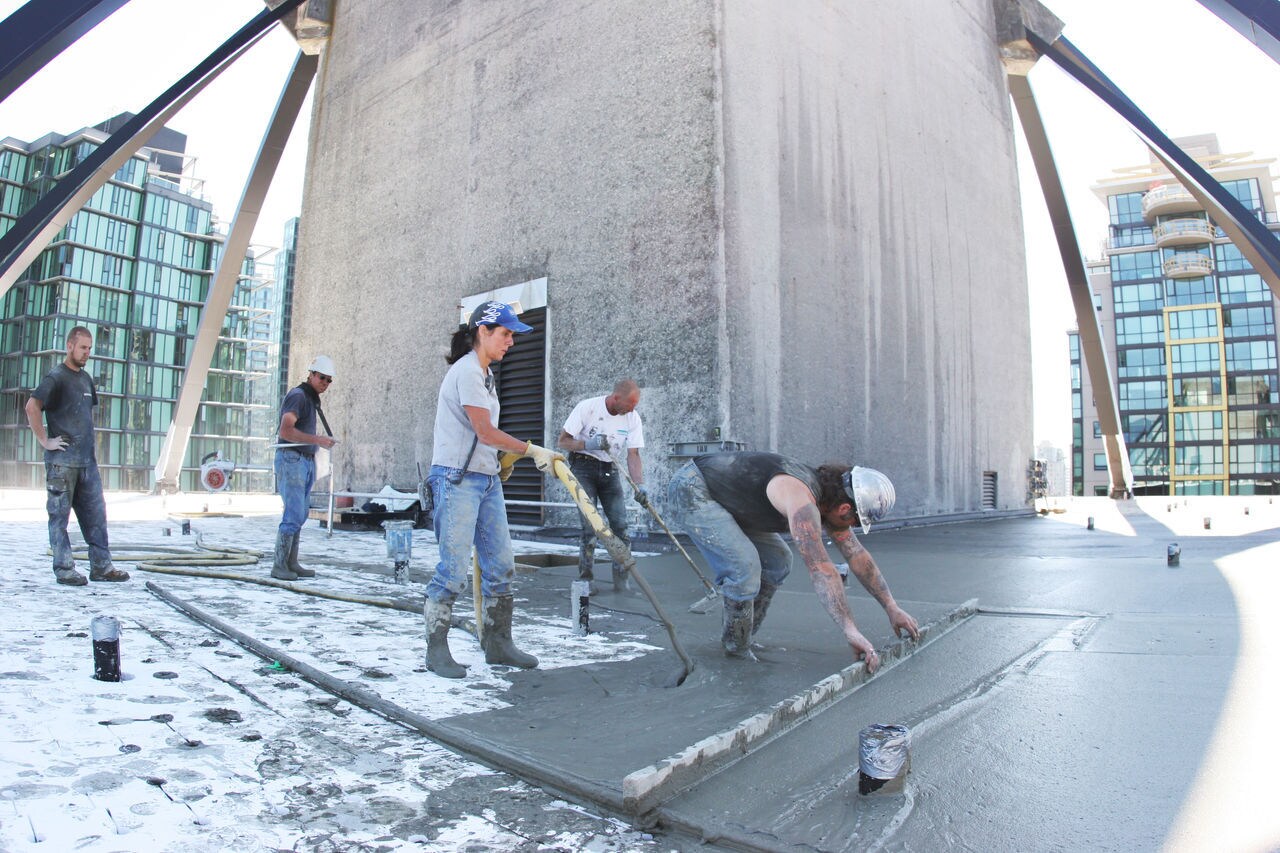
Another roof insulation option is lightweight insulating concrete (LWIC). LWIC provides thermal resistance benefits, and, through mass effect, it can prolong the lifespan of roof membranes by lowering membrane temperatures. It also reduces the need for insulation replacement during reroofs, thus reducing the life cycle cost of the roofing system, reducing waste, and reducing carbon impacts during reroofing.
Factors to Consider for Insulation
The following factors are important considerations when choosing roof insulation products that contribute to an effective carbon reduction strategy:
Material Characteristics
Durability: Insulation that resists moisture gain and has high compressive strength while retaining thermal efficiency over time can help extend the service life of the roof assembly. These characteristics can help reduce replacement frequency and the embodied carbon expenditures when reroofing. Depending on project location and climatic conditions, the use of cover boards can also protect roof insulation and contribute to overall roof assembly durability and resiliency.
Thermal Retention Over Time: Long-term R-value retention of roof insulation products ensures sustained operational carbon savings.
Low Global Warming Potential Manufacturing: Roof insulation with recycled content and/or low-emission production and transportation methods can reduce embodied carbon. Prioritizing insulation options with Environmental Product Declarations (EPDs) and Health Product Declarations (HPDs) makes it more likely to meet LEED criteria and address sustainability objectives.
Compatibility and Integration
Roof Assembly Coordination: Roof insulation functions as part of an assembly in conjunction with roof membranes, vapor retarders, and air barriers. Mismatches in vapor permeability, thermal expansion, or air barriers can lead to moisture infiltration, biological growth, or premature failure.
Insulation Attachment Methods: On metal roof decks, mechanical attachment of insulation is efficient and economical. In areas with severe hail, a hybrid approach may be prudent, where the first insulation layer is attached mechanically, with subsequent layers adhered. This approach can also reduce thermal bridging, which reduces effective R-value, negatively impacting operational carbon levels. The use of solvent-free adhesive when adhering insulation and membranes is another option that contributes to sustainability initiatives due to its low-VOC content.
System Design Variables
Climate Zone: Local climate conditions influence the choice of insulation thickness, configuration, and type. For example, building codes in colder climates require higher R-value insulation than in other locations.
Roof Assembly Type: The analysis of various roof assemblies, based on local conditions, codes, and building type, can help optimize resilience while considering cost and ease of installation.
Life Cycle Cost Planning: Investment in high-performance roof insulation can save operational energy thereby decreasing the payback period required to offset the insulation's embodied carbon.
Frameworks for Evaluation
The following standards and tools can be used in the evaluation of roof insulation with the goal of carbon reduction:
ASHRAE 90.1: Sets minimum insulation requirements to reduce operational energy use.
LEED: Rewards material transparency and low environmental impact in construction.
EN 15978: Offers metrics for embodied carbon across building life cycle phases.
Whole Building Life Cycle Assessment Tools: Evaluate a product's embodied and operational carbon impacts from raw material extraction through end-of-life disposal, allowing modeling of various insulation choices and their effect on the building's total carbon footprint.
While regulatory standards set minimum insulation requirements, it is worth considering exceeding these benchmarks to further reduce operational carbon and future-proof the building against increasing climate challenges.
In building design, consideration of a product's value in terms of embodied versus operational carbon can yield results that reduce the total carbon footprint of the project, extend system longevity, and support long-term sustainability goals.
