

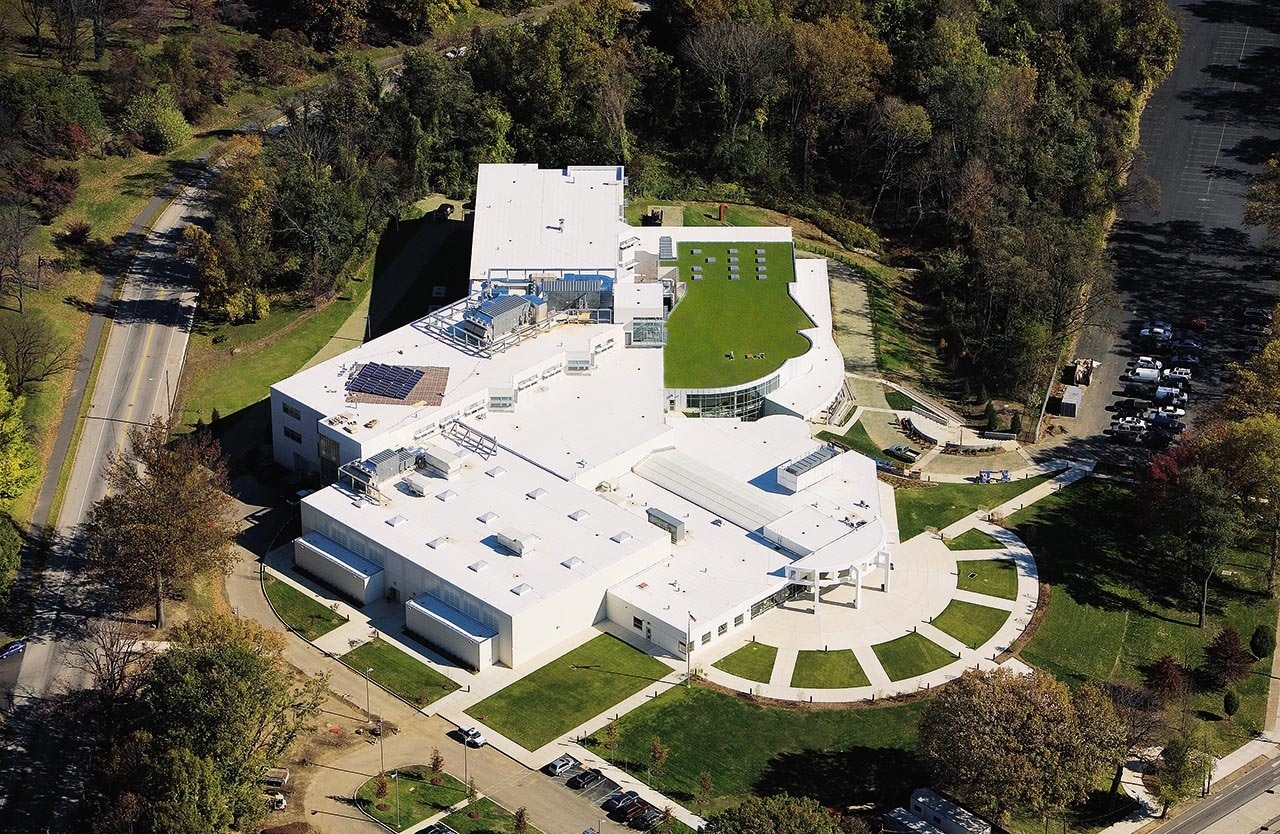
As demand for sustainable buildings grows, architects and consultants play a crucial role in ensuring energy efficiency and resilience—especially at key junctions, like roof-to-wall transitions. With this in mind, here are some advanced design strategies to help professionals design energy-efficient roofing for climate-responsive buildings.
Optimizing Insulation for Thermal Performance
Designing a climate-resilient roof-to-wall transition begins with implementing effective insulation strategies, focusing on the placement and selection of continuous insulation to reduce heat loss and enhance the building's overall thermal performance.
The 2024 International Energy Conservation Code (IECC) mandates that roof insulation be installed in a minimum of two layers and staggered at the edge joints of each insulation board. While earlier codes permitted single-layer insulation with continuous edge joints, which increased airflow and reduced R-value, the updated code mandates offsetting joints to reduce air leakage.
When selecting roof insulation for cold climates, it's important to consider both thermal performance and temperature stability. Polyisocyanurate (polyiso) is a popular commercial roofing insulation due to its high R-value per inch (R-6 to R-6.5). Its foil face reflects heat back into the building and provides vapor control, preventing moisture from traveling upward into the insulation and roof assembly.
Extruded polystyrene (XPS), another effective solution with a lower R-value of 5 per inch, is generally more expensive. However, it's useful where durability, moisture resistance, and stable performance in sub-freezing conditions are essential.
The most economical option is expanded polystyrene (EPS) insulation at approximately R-4/inch. Though it has the lowest R-value, EPS can maintain a stable insulating value in cold weather.
Lastly, although mineral wool is the most expensive option, it is ideal for situations where moisture resistance, fire resistance, and/or soundproofing are important, all while preserving thermal performance in low temperatures.
Selecting Climate-Resilient Building Materials
In warm climates, designing energy-efficient roofing requires careful selection of roofing materials to withstand the environmental challenges of hotter climate zones. Metal roofs, for example, reflect solar radiation. Alternatively, tile roofs made of clay or concrete have natural thermal mass, resisting heat absorption. When paired with proper roof ventilation and reflective coatings, these roofs can keep buildings more comfortable by slowing heat transfer into the building.
Reflective and ventilated roofing systems—especially cool roofs—are key to reducing solar heat gain and lowering energy use. Cool roofs, typically white or light-colored, have high solar reflectance and thermal emittance, which can help reduce rooftop and indoor temperatures.
In warm climates, single-ply roofing, especially paired with proper coatings or reflective materials, like white membranes, can significantly reflect sunlight and heat, minimizing heat gain into buildings. Materials like TPO and PVC are particularly well-suited, offering high reflectivity to reduce heat absorption and lower cooling costs. EPDM is another appropriate material selection, known for its strength, durability, and ability to handle temperature changes well. However, since most EPDM membranes are black, choosing a light-colored version may cost more.
Overall, selecting the right roofing system for hot climates involves balancing solar reflectance, thermal emittance, and material properties. Designers should prioritize roofs that reflect solar radiation and quickly release heat.
Mitigating Thermal Bridging Through Fastener Design
Fastener placement and material selection play a crucial role in the thermal performance of roof-to-wall transitions. A report by the International Institute of Building Enclosure Consultants found that embedding fasteners below the top insulation layer can reduce heat loss by up to 70% compared to fasteners that penetrate through to the surface. Additionally, swapping out metal fastener caps—the components located just beneath the membrane—for plastic ones reduced thermal loss per fastener by 44%, as the plastic acts as a small thermal break.
Another strategy to preserve R-value is to use fasteners in combination with an adhered cover board. A GAF study revealed that a cover board mitigates thermal bridging caused by fasteners, as placing fastener heads and plates beneath the board can significantly lessen heat transfer.
To reduce thermal bridging losses caused by elements like fasteners, designers can increase the roof and exterior wall insulation R-value to offset losses. Since fasteners can diminish the thermal performance of the assembly, specifying insulation levels above code minimums can help maintain the assembly's energy performance. To further reduce heat loss, designers can utilize adhesive methods to attach insulation layers, rather than mechanical fasteners and plates, eliminating penetrations that act as thermal bridges. This can help maintain a continuous insulation layer.
Another key aspect of designing a climate-resilient roof-to-wall transition is minimizing thermal breaks, as these joints are vulnerable to thermal bridging. To reduce heat loss, maintaining continuous insulation is key. Designers can extend rooftop rigid insulation, such as polyiso or mineral wool, from the wall over the roof edge or parapet to the exterior facing wall.
If continuous insulation is not feasible, materials with lower thermal conductivity should be prioritized. For instance, wood performs better than steel in limiting heat transfer, though neither compares to dedicated insulation materials. Insulation products, like polyiso, mineral wool, and spray foam, offer superior thermal performance. Any gaps in the insulation can then be sealed with spray foam to maintain continuity.
Air and Vapor Control for Resilient Transitions
Designing a climate-resilient roof-to-wall transition requires careful integration of air and vapor barriers to effectively control air leakage, prevent moisture infiltration, and support indoor comfort and building durability. While air barriers have been required in previous energy code versions, the IECC 2024 reduces the allowable air leakage rate in the building envelope to 0.25 cfm/ft². This stricter standard demands improved sealing to minimize air leakage and infiltration.
First, air and vapor barriers must be continuous across all components of the roof and wall, including penetrations. It's essential to use compatible materials that can seamlessly seal together, avoiding gaps, laps, or interruptions. Overlapping the air and vapor barriers at the roof-to-wall transition can further prevent air or moisture from moving through a gap in insulation.
Second, proper placement of these barriers depends on the climate. In cold climates, vapor retarders are typically installed on the interior side of insulation (the warm side during winter) to prevent indoor moisture from condensing within the walls. Note that the vapor retarder also often acts as an air barrier. However, if there's a separate air barrier layer, it should also be placed on the warm side of the insulation to prevent warm indoor air from escaping. In warmer, humid climates, the air barrier may be placed on the exterior side to block humid outdoor air from entering the cooler interior spaces. The air barrier should be appropriately vapor-open to allow drying during the cooler months.
Designing for Resilience
Architects and consultants play a pivotal role in enhancing building envelope performance through thoughtful design choices that prioritize energy efficiency, durability, and sustainability. Climate-resilient roof-to-wall transitions need to account for increasing climate risks and extreme weather events, ensuring the assembly can withstand environmental stressors. For example, heavy precipitation and flooding may necessitate effective waterproofing measures, including high-quality flashing and barriers, to direct water away from the roof-to-wall joint.
Choosing resilient, long-lasting materials that can withstand specific environmental conditions—such as UV rays, moisture, and thermal stresses—ensures the building remains resilient over time.
