

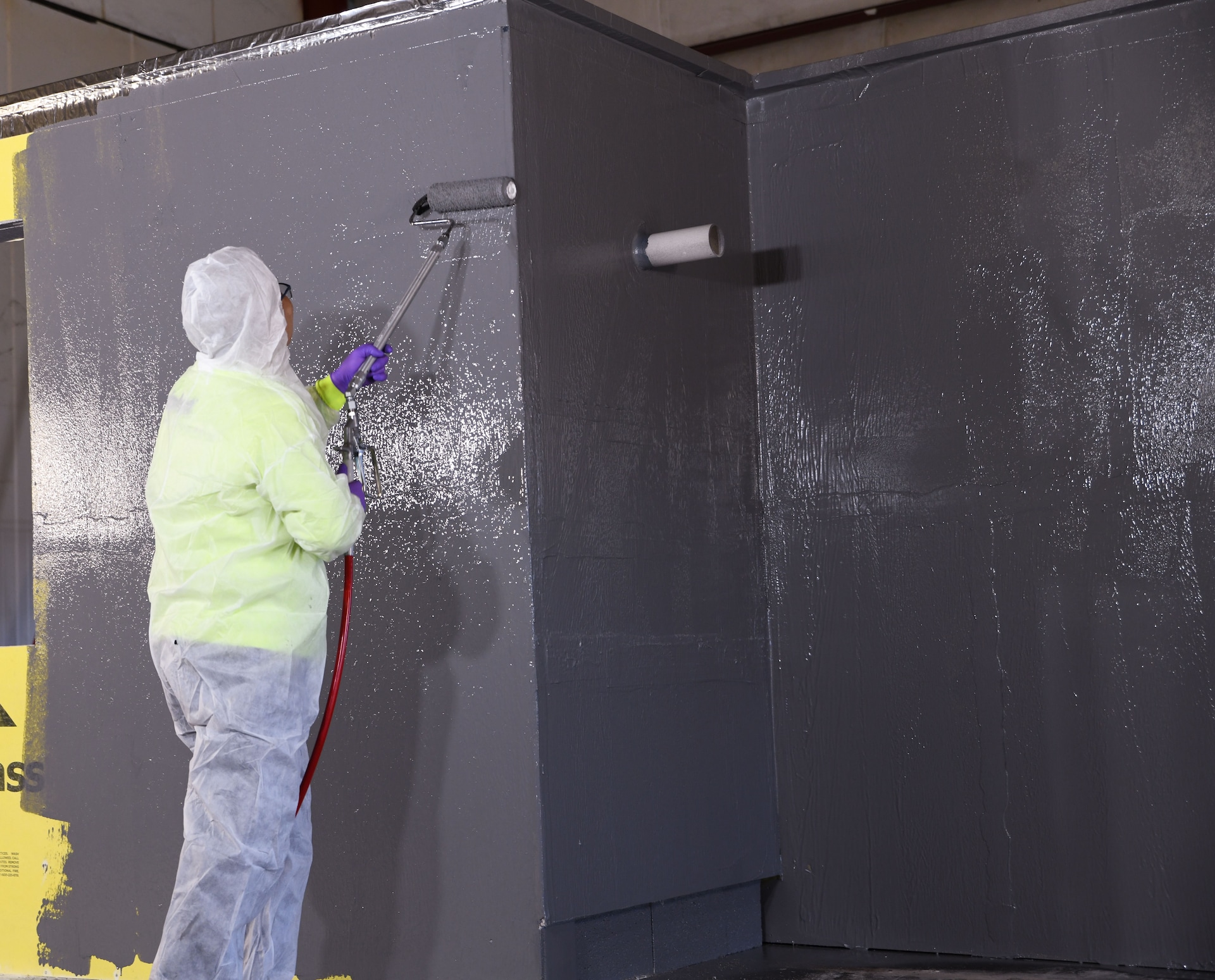
Insights for High-Performance Building Solutions
The overall building and construction industry is really good at keeping bulk water out of buildings, as is true for underground capillary water. It’s been relatively recent that the industry has been actively managing air-transported moisture into and out of buildings. The introduction of air barrier requirements in the 2012 International Energy Conservation Code (IECC) signaled a major shift in how we approach the building enclosure. We now understand that air can transport a significant amount of moisture, making the control of air-transported moisture one of the focal points in modern design.
A high-performance building enclosure relies on four continuous control layers: water, air, thermal, and vapor. Often, the most efficient way to manage air and vapor is through an Air and Water-Resistive Barrier (AWB) system that combines functions to minimize unwanted air-movement. Combining two functions into one layer also reduces on-site labor.
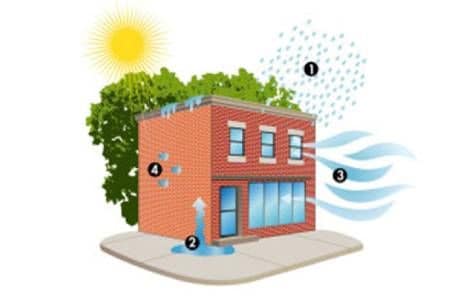
In our white paper, "Air and Water-Resistive Barriers: The latest advancement in the building enclosure," we dive deep into the science of building enclosures, discuss critical transitions, and the four control layers, and provide the benefits of using an air barrier.
In this white paper, you will learn about:
The Four Lines of Defense: Understanding how building enclosures manage bulk water, capillary water, air-transported moisture, and water vapor.
Air Barriers vs. Vapor Retarders: Clarifying the critical differences between these components and why "breathability" matters in different climate zones.
The Efficiency of Combined and Compatible Systems: How modern AWB systems, such as Siplast WALLcontrol, provide a continuous barrier that easily transitions to roofing and waterproofing systems.
Considerations for Selection of AWB Systems: Navigating current requirements to ensure structures are protected from air intrusion and long-term moisture migration.
As we continue to focus on performance and resilient design, selecting the right AWB system becomes a decision for the longevity and efficiency of a commercial structure.
